
Are you unsure how often to visit the dentist here in the UAE, with sweetened coffee, dates, and shisha raising the risk of tooth decay and staining? I felt that worry, so I dug into the research and found the American Dental Association recommends dental visits every six months for most people to protect oral health.
I will show when routine checkups and professional cleanings help, when fluoride, x-rays, or more frequent care matter, and how conditions like diabetes or dry mouth change your preventive care.
Read on for clear, simple advice.
Key Takeaways
- Most people in the UAE should visit the dentist every six months, as advised by the American Dental Association and sources like the University of Pennsylvania School of Dental Medicine.
- People with gum disease, cavities, braces, diabetes, or dry mouth may need to go every three to four months for extra care.
- Dental insurance plans in the UAE often cover one or two checkups each year at no extra cost.
- Children and teens should get dental exams twice a year. Seniors or those on many medications may need more visits due to higher risks like dry mouth and gum recession.
- Look for early warning signs such as bleeding gums and sensitivity. Choosing a clinic with good hours—like Kennedy Dental’s 7:00 AM start—can make regular visits easier.
Why Regular Dental Visits Are Essential
Regular dental visits keep our smiles bright and healthy. They help find problems early, before they become big issues. This way, we can avoid painful treatments and save money in the long run.
Professional cleaning plays a huge role too; it removes tartar buildup that brushing at home can miss. Good dental hygiene means fewer worries about gum disease and tooth decay. When we take care of our teeth now, we’re ensuring better health later on!
Early detection of dental issues
Many dental problems start with no signs, so I trust routine dental exams to find hidden trouble. I have seen X-rays reveal advanced cavities, bone loss, and hairline cracks before they hurt.
Patients with bleeding gums, persistent bad breath, temperature sensitivity, rough tooth surfaces, or more food trapping need an earlier visit. The ADA asks for visits every six months, and sources like pmc.ncbi.nlm.nih.gov and the University of Pennsylvania School of Dental Medicine support that schedule for spotting periodontal disease and oral cancer.
Catch small issues early, avoid big procedures later.
I check for tartar buildup, gum disease, and signs tied to medical conditions like Sjogren’s syndrome, since delays can mean complex, costly treatment. My reviews include a look at dental insurance limits, the Lifesmile program, and personalized care plans from clinics such as Brock’s Gap Dental Group or Delaware Smile Center.
That focus leads straight into the role of professional cleaning and maintenance.
Professional cleaning and maintenance
I visit my hygienist for regular cleanings, and they remove plaque and tartar that my brush and floss miss. Dental hygienists clear tartar from hard to reach spots, they polish stains from sweetened Arabic coffee and dates, and they help my oral hygiene.
I think of preventative care as a shield for my dental health, I log dental checkups on my calendar, and I ask about my Lifesmile ScoreTM and the Lifesmile wellness program during visits.
I need extra visits if I wear braces or have crowns, because orthodontic treatment and dental restorations trap food and raise my risk for dental disease. My dentist, who trained at Penn Dental Medicine, or a clinic like Brocks Gap Dental Group, and insurers like Delta Dental, all support more frequent cleanings for these cases.
I track my dental care, I keep appointments, and I tell my provider about diet and risk factors so they can give a personalized evaluation.
Prevention of costly treatments
I catch small cavities early with a regular dental check up, and that keeps treatment simple, and less costly. I saw a clinic in Middletown, Delaware stop a tooth infection that would have needed a root canal.
I use my browser to book visits, and I follow advice from Dr. Shivang Patel, Dr. Lauten Johnson, or Dr. Lauren Denson when I need another opinion.
I link oral care to overall health, and I know poor gum health can raise heart disease risk. I skip fewer visits now, because missed checks let small problems grow into big bills. I ask Dr.
Lacey Sullivan or Dr. Patrick Nassetta for prevention tips, and I act on them fast.
Standard Dental Visit Frequency
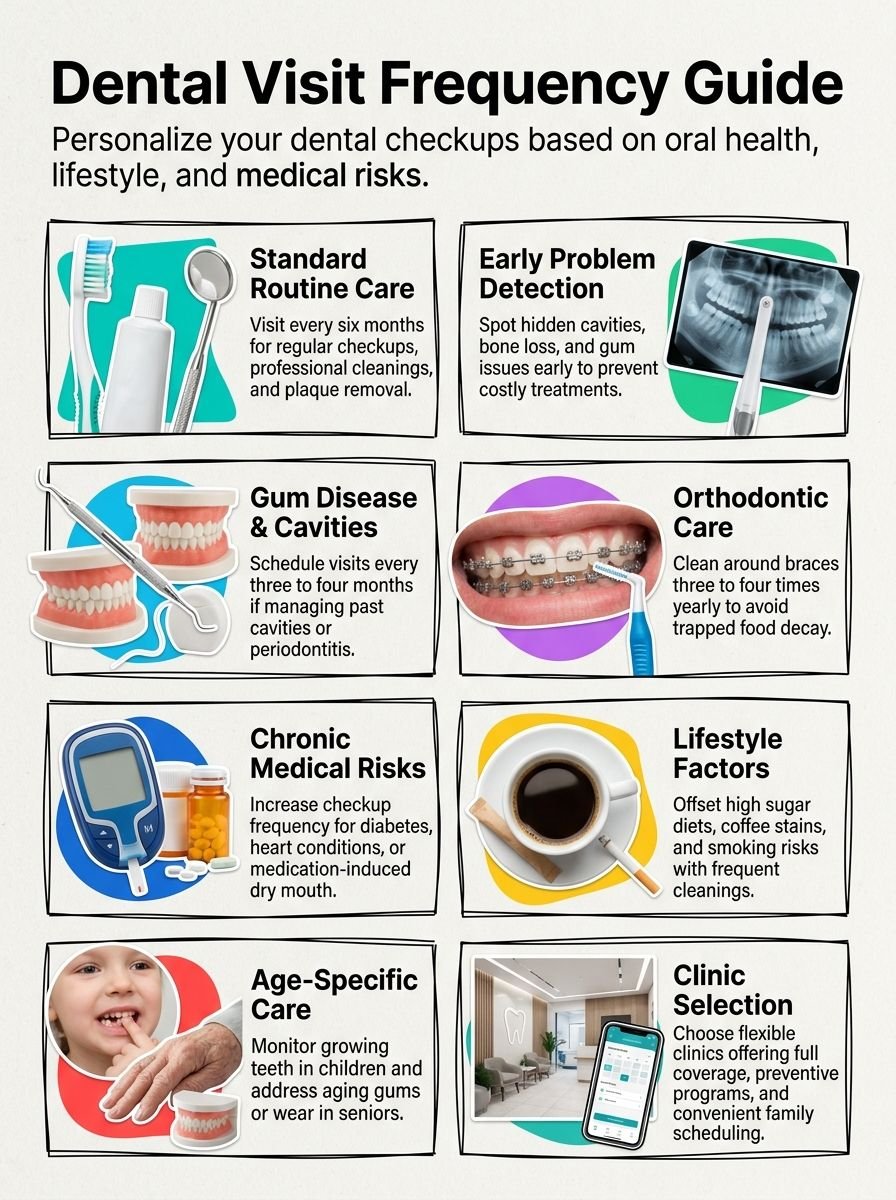
Most people should visit the dentist twice a year. This keeps their teeth and gums healthy, but some may need to go more often for extra care.
Twice a year for most patients
Twice a year is the standard for most patients. I visit the dentist every six months for check-ups and cleanings. This schedule works well for healthy adults and children who have little plaque buildup.
It helps catch problems early, so they don’t turn serious.
Many dental insurance plans in the UAE cover one or two visits a year at no extra cost. I look forward to these appointments as they keep my teeth and gums healthy. Visiting twice a year suits those with stable oral health and low cavity risk, which makes me feel good about my routine care.
Dr. Dane Hoven and Dr. Al Jones both agree that regular visits are key to maintaining great oral health. Thanks to these check-ups, I can stay on top of my dental care without worrying too much about costs or issues down the line.
Factors that may require adjustments
Regular dental visits are a must for good oral health. Some people may need to adjust how often they go to the dentist. The following factors can influence these adjustments:
- A history of gum disease or cavities means more trips to the dentist. I have learned that past issues make it easier for problems to return.
- If someone is undergoing orthodontic treatment, more visits are necessary. Aligners and braces can create extra challenges for keeping teeth clean.
- Medical conditions that affect oral health can call for frequent check-ups. For example, diabetes or medications that dry the mouth increase cavity risks.
- Lifestyle habits also impact dental visit frequency. Smoking or having a diet high in sugar can lead to more plaque and buildup.
- Tartar accumulation may require me to see my dentist sooner rather than later. I know that if tartar builds up, it leads to gum problems and sensitivity.
- Adults who face ongoing issues like tooth sensitivity should consider visits every three or four months. Ignoring this could lead to severe pain down the road.
- Good oral health history allows others to extend visits to every nine to twelve months, as suggested by Dr. Linda Makuta DDS; still, regular checks remain vital for everyone.
Understanding these factors helps me take charge of my dental care choices and ensure healthy teeth and gums throughout different stages of life.
When More Frequent Visits Are Needed
When I have a history of gum issues or cavities, I know I need to see the dentist more often. If I’m getting braces or have health problems that affect my mouth, extra visits are a must.
History of gum disease or cavities
A history of gum disease or cavities means I need to pay closer attention to my dental visits. For me, this could mean going to the dentist every three to four months. Regular check-ups help monitor any changes in my oral health.
If I’ve had gum issues before, it’s vital for the dentist to keep an eye on things. Smoking and using tobacco can also raise risks for me; these habits often lead to more problems with gums and teeth.
Dry mouth is another concern that affects many people like me. Medications or certain health conditions may cause this issue, but it increases the risk of tooth decay too.
Undergoing orthodontic treatment
My dental visits change when I am undergoing orthodontic treatment. Braces and other devices complicate cleaning my teeth. They can trap food and plaque, which leads to tooth decay if not cleaned properly.
Because of this, I need more frequent visits to the dentist. Going three to four times a year is often necessary.
For kids or teens with braces, extra care is vital too. This age group may need dental check-ups more than every six months. The goal is to keep their oral hygiene in top shape and prevent cavities as the teeth shift into place.
Regular monitoring helps catch issues early and keeps smiles healthy during treatment.
Medical conditions affecting oral health
Dental health can change due to certain medical conditions. Diabetes is one example. This illness can raise the risk of gum disease and infections in the mouth. Regular visits to the dentist help catch these issues early.
Chronic illnesses also impact oral care. They may make it hard for my body to heal. Conditions like heart disease or respiratory problems can add more risks for oral health, too. Extra check-ups ensure that any problems are dealt with quickly.
Then there are seniors using several medications at once. These drugs often cause dry mouth, which can lead to decay and discomfort. A dentist visit every few months might be necessary in such cases.
Keeping track of how these factors affect oral health makes a huge difference.
Dental Care Recommendations for Different Age Groups
Taking care of your teeth is key at every age. Kids need regular checkups for healthy growth and to avoid cavities. Teens often face braces, so they must see the dentist more often.
Adults should keep up with cleanings and exams, especially if they have gum issues. Seniors may need special attention for worn teeth or dry mouth. For more tips tailored to you, make sure to read on!
Children and teens
Children and teens should visit the dentist every six months. This keeps their teeth healthy and helps catch problems early. High-risk cases, like those with braces or a history of cavities, may need checkups more often.
A good diet is also key. Lots of sugary foods can lead to more visits.
Some kids with strong oral health might stretch their appointments to every eight months, but this is rare. Regular dental visits help watch over growing teeth and prevent decay in children and teens.
It’s all about keeping smiles bright!
Adults
Adults with good oral health typically visit the dentist twice a year. This routine helps catch any early problems before they worsen. Skipping visits can lead to missed issues that may require more treatment later.
Some adults face ongoing dental challenges like sensitivity or gum disease. If this is my case, I might need to see the dentist every three to four months. Those with diabetes or a history of cavities should also plan for more frequent visits.
Lifestyle choices can affect oral health too. Smoking and high sugar intake can increase risks. Being aware of these factors helps me decide how often I should visit the dentist for optimal care and maintenance.
Seniors
Seniors need to visit the dentist more often. Gum recession is common as we age. Dry mouth can also result from medications, making oral health harder to maintain. Existing dental work may require extra care too.
Visits should happen more than twice a year if there are health issues or challenges with home care. This group often takes multiple medications, which increases the risk of oral problems.
Regular check-ups allow for closer monitoring of these risks.
Professional cleaning matters a lot for seniors; tartar buildup and gum disease become more likely over time. These visits help keep smiles healthy and happy!
Choosing the Best Dental Clinic in Dubai
I look for a dental clinic that meets my needs. Delaware Smile Center and Kennedy Dental are great options in Dubai. Both places offer many services, which makes it easy to find what I need.
To make scheduling easier, I appreciate Kennedy Dental’s hours. They open at 7:00 AM until 5:00 PM from Monday to Thursday, and 7:00 AM to 12:00 PM on Friday. This schedule is convenient for families.
It helps me plan visits without disrupting my day.
Before visiting a clinic, I check my health insurance coverage for dental cleanings each year or every six months. When booking an appointment, sharing details about any specific symptoms can help get the best care possible tailored just for me! Consistency matters too; I often book appointments with family members together to keep our smiles healthy!
Conclusion
Regular dental visits are essential for a healthy smile. Seeing the dentist every six months is best for most people. Still, some may need to go more often based on their health needs.
Being aware of warning signs like bleeding gums or tooth sensitivity can help identify issues early. Taking care of my teeth means saving time and money in the long run!
For more information on finding top-quality dental care, check out our complete guide to the best dental clinics in Dubai.
FAQs
1. How often should an adult in the UAE visit the dentist?
Most adults should visit every six months, for a checkup and cleaning. If you have gum problems or ongoing issues, visit every three to four months. Ask your dentist, and follow the patient guide from your clinic.
2. How often should children in the UAE see the dentist?
Start visits by the first birthday, then go every six months. Early visits catch problems, teach good habits, and protect tooth development. Keep visits regular, and bring health records if you have them.
3. Do I need more visits for dental problems or pain?
Yes, see the dentist right away for pain, bleeding gums, loose teeth, or a dental emergency. Some conditions need care every three months, or on a plan set by your dentist. Follow their advice, and keep records of treatments.
4. Does insurance or clinic rules change how often I should visit?
Yes, insurance and your dental clinic plan can affect visit frequency, coverage, and costs. Check your plan, and ask the clinic about covered checkups and cleanings. Preventive visits can lower future costs.
[…] Tags: bestdentalclinicabudhabi bestdentalclinicdubai Dental Insurance in the UAE: dentalclinicuae dentistnearme Which Clinics Accept Your Plan? ← Previous Post How Often Should You Visit the Dentist? A UAE Patient Guide […]